
A properly installed, well-maintained resin driveway can last upwards of 25 years. For homeowners considering resin driveways in Bromley, that potential lifespan makes installation quality and ongoing care just as important as choosing a colour you’ll enjoy seeing every day.
Look beyond the finished appearance: the base condition, aggregate blend and preparation all affect how a resin driveway performs over time. Learn what influences its lifespan, how colours and aggregates shape the look, and what to expect from preparation and installation.
This guide also explains when an existing concrete or tarmac surface may be suitable as a base, how long installation can take, and where Bromley homeowners can access local coverage. With the practical details in hand, you can plan a driveway that suits your property and understand the steps involved before work begins.
Key Takeaways
- A properly installed and maintained resin-bound driveway can last upwards of 25 years, with the base and routine care influencing its lifespan.
- Aggregate colours and blends change the overall look, so consider how the chosen finish will sit alongside your home and frontage.
- Preparation matters: a stable existing concrete or tarmac surface may be suitable as a base for resin-bound surfacing.
- Resin-bound paving is permeable in most cases, which can help manage rainwater on a front garden driveway.
- Local coverage, site preparation and the layout of your property all shape the installation plan for a Bromley driveway.
How long will your resin driveway be good for?
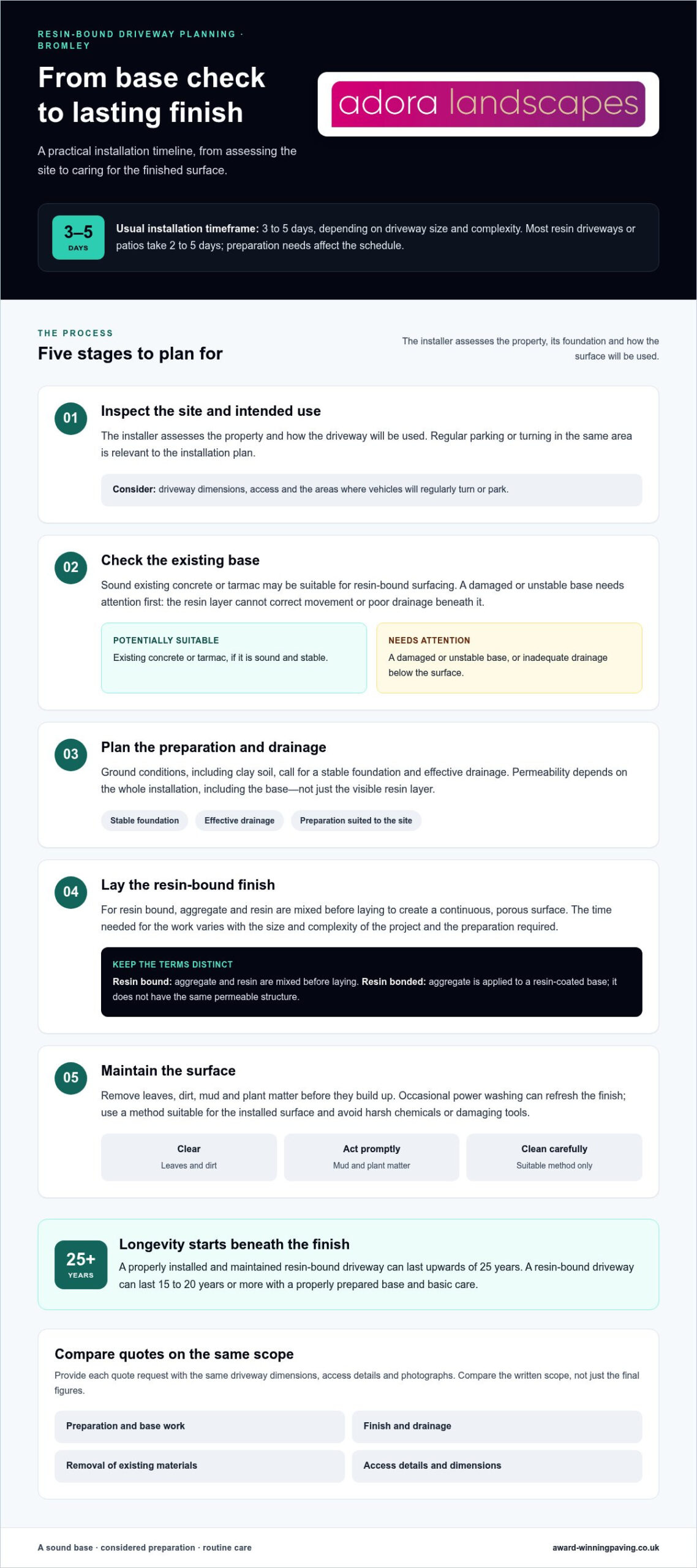
A resin-bound driveway can last 15 to 20 years or more when installed over a properly prepared base and given basic care. With proper installation and maintenance, a well-maintained surface can last upwards of 25 years. For resin driveways in Bromley, the base, workmanship and upkeep all affect how long the finish remains in good condition. Those details matter more than choosing an aggregate colour alone.
Installation quality matters because the resin-bound layer depends on a stable foundation. If existing concrete or tarmac is sound, resin-bound surfacing may be laid over it. A damaged or unstable base needs attention first. The installer assesses the site and its intended use, including whether cars will regularly turn or park in the same area.
Routine care helps preserve the surface. Remove leaves and dirt before debris builds up, and use occasional power washing to refresh the finish. Choose a cleaning method suitable for the installed surface, avoiding harsh chemicals or tools that could damage it. Clear mud and plant matter promptly, particularly around edges and in shaded areas where damp debris can linger.
How does a resin-bound driveway compare with block paving, tarmac and concrete? Resin-bound surfacing creates a continuous, permeable finish. Block paving uses individual units with visible joints, while tarmac has a plain continuous finish and concrete forms a solid surface. For your Bromley property, weigh appearance, drainage and maintenance when choosing.
It’s useful to distinguish resin bound from resin bonded. Resin bound mixes aggregate and resin before laying, creating a smooth, porous surface. Resin bonded applies aggregate to a resin-coated base, leaving a textured, loose-stone-like finish. The difference affects appearance and permeability: resin bonded does not have the same permeable structure as resin-bound paving.
How can I get quotes for a resin driveway in Bromley and compare them fairly? Provide the same driveway dimensions, access details and photographs with each quote request. Compare the written scope, including preparation, base work, finish, drainage and removal of existing materials, rather than comparing the final figures alone.
Is resin-bound surfacing suitable for Bromley’s clay soil and local weather? It can suit a Bromley property with clay soil if the base is designed and prepared for the ground conditions. A stable foundation and effective drainage are essential, as the resin-bound layer cannot correct movement or poor drainage beneath it.
In most cases, resin-bound paving is permeable and can meet the rules for paving front gardens without additional drainage. This can make it practical where surface water needs to drain through the driveway. Permeability depends on the whole installation, including the base, not just the visible resin layer. A properly prepared base, suitable aggregate blend and regular cleaning all support lasting performance.
Resin colours, aggregate blends and UV stability
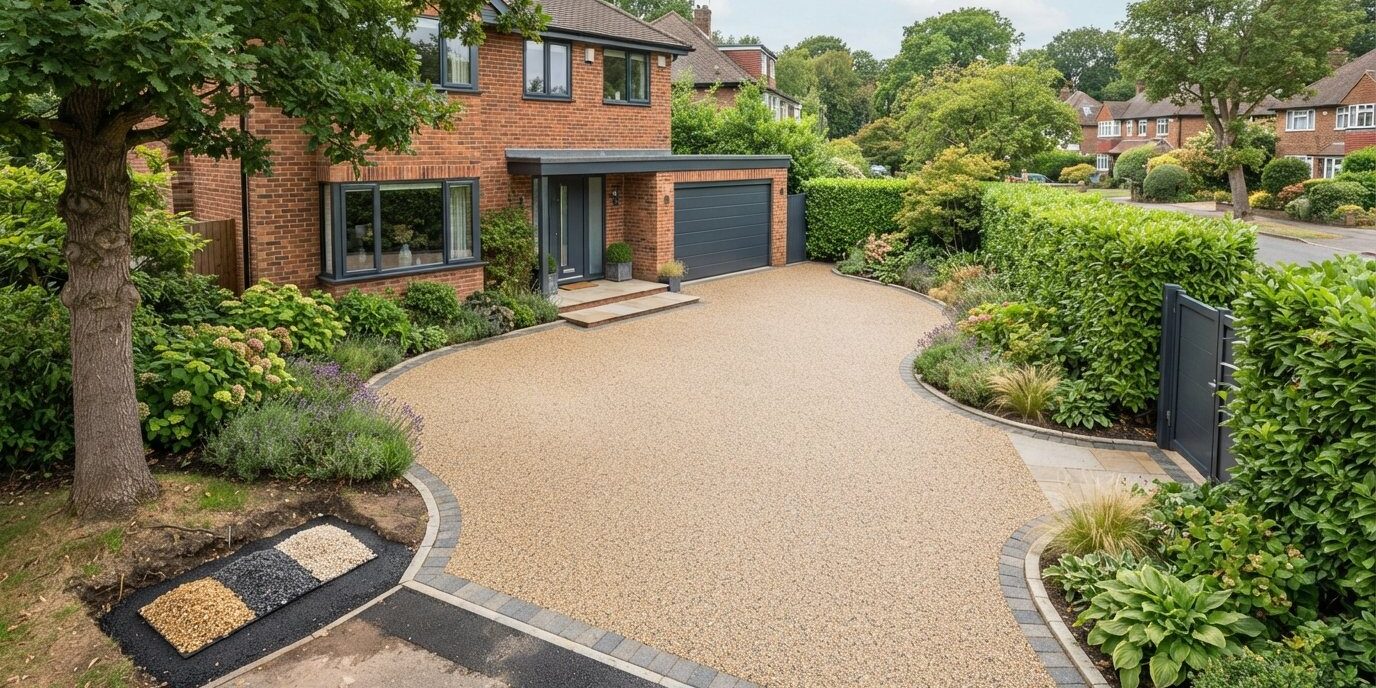
Aggregate colour makes an immediate impression, but stone size, shape and blend also affect the finish. A pale mix can brighten a shaded entrance, while darker stones create stronger contrast against light brickwork. For resin driveways in Bromley, compare samples with your brickwork, roof tiles, windows and garden boundaries. The same blend may look different in direct sun and shade.
Two named blends illustrate the range of possible looks. Rose Garden combines red stones with different shades of brown, using angular aggregate for a varied, natural appearance. Santorini mixes reds and whites with hints of black for more contrast. These examples can help you describe a preferred palette more clearly than broad labels such as “warm” or “neutral”.
Familiar colours remain popular because homeowners want a clear idea of the finished result. A survey of the frontage helps narrow the choice: view sample colours beside the house, paving and garden, then consider them in changing daylight. A blend that looks balanced against brick during bright conditions may appear more subdued beneath trees or beside a north-facing wall.
Match the colour to the home’s character. Red and brown aggregate can complement traditional brick houses, while restrained greys may suit modern façades and clean-lined patios. You do not need to match every material exactly. Instead, relate the blend to one or two existing features, such as the roof or window frames, without competing with them.
Consider UV stability as well as the colour sample. Sunlight can affect some resin systems over time, so both the resin’s UV stability and the aggregate’s natural colour matter. Ask for the resin specification and whether the selected system is designed for UV exposure. A stone blend may retain its colour, but that alone does not show how the binder will look after prolonged sunlight.
Borders can define the driveway without making its centre feel busy. A charcoal edge around lighter aggregate, for example, can highlight the entrance or create a clear boundary beside planting. Keep the design in proportion to the frontage: a narrow border may suit a compact approach, while a broad feature could overwhelm a small garden.
Before settling on a blend, compare physical samples against the house exterior and existing paving. Check the surface from the pavement and from the front door, since both viewpoints shape its appearance. If you’re weighing colours for a new resin-bound finish, browse the resin-bound driveway option as part of planning a palette that suits your home.
Installation steps and preparation
A resin driveway installation in Bromley usually takes 3 to 5 days, depending on its size and complexity. Most resin driveways or patios take 2 to 5 days, with preparation needs affecting the schedule. The work starts with inspecting the property, measuring the area and identifying the condition of the existing surface. Those checks help establish whether concrete or tarmac can support the new finish.
A resin-bound surface can be laid over concrete or tarmac if the existing surface is stable and in good condition. The installer prepares the area, addresses unsuitable sections and checks levels and drainage before laying the mix. A damaged or unstable base needs attention first, since a poor foundation can undermine the new surface.
The main installation stages are:
- Prepare the site. Clear the driveway and assess the base, access and edges.
- Set up the surface. Confirm levels and the area to be covered, including borders.
- Lay the resin-bound mix. Spread and smooth the aggregate and resin to create an even finish.
- Allow it to cure. Keep people and vehicles off the new surface for the appropriate period.
A new resin-bound driveway can usually be walked on after a few hours. It can usually take vehicles after about 24 to 48 hours, depending on the weather. These curing times make access planning important: arrange parking elsewhere and keep foot traffic away until the surface is ready.
Which resin driveway installers serve Bromley, and what are their reviews and accreditations? Bromley homeowners can use local paving specialists for driveway installations. Reviews and accreditations relate to each individual company. To make a useful comparison, look for reviews that discuss resin-bound work and the installation process, as well as relevant accreditations held by the installer.
What warranties and guarantees do Bromley resin driveway companies offer? Terms vary between companies and projects. Read the written terms before installation, including what work is covered, the duration, exclusions and any care requirements.
For a domestic property, access, driveway size and base condition shape the work involved. Commercial resin installations may have different site requirements, so do not apply domestic driveway timings automatically to commercial projects. A clear installation plan should set out the work included and how the site will be prepared.
Weather affects curing, so plan the installation schedule alongside vehicle access. Before work starts, move cars off the driveway and keep the route clear for the installation team and materials. This helps the work proceed in sequence and protects the fresh surface while it cures.
Bromley neighbourhoods and service coverage
Resin driveway installation is available in Bromley and across Kent and South East London. Access, frontage layout and the condition of the existing driveway all help shape the practical installation plan.
Bromley Neighbourhood Coverage
Coverage is focused on Bromley, rather than a published list of individual neighbourhoods. If your property is in the borough, describe its location and driveway when discussing the work. For example, note whether the entrance is narrow, the frontage slopes, or vehicles need to pass through a shared access. These details help define the site requirements without assuming every street has the same layout.
A local installation plan should suit the property. A compact frontage may call for a simple, seamless finish, while a wider entrance could accommodate a defined edge or separate parking area. Consider how the resin surface will meet the pavement, garden paths and existing block paving. A clear boundary keeps the driveway functional and makes the transitions between surfaces look deliberate.
Access is another practical consideration. Identify where materials can be brought onto the property and whether parked vehicles obstruct the work area. A narrow approach, gate or shared drive can affect how the team organises the site. Sharing these details early helps shape a realistic plan for a Bromley home.
Local Service Areas
The service area includes Bromley, Kent and South East London, giving homeowners in the region a starting point for planning resin driveway work. When describing your property, provide its address or postcode and explain where the project is, such as a front drive, side access or courtyard entrance.
For homes near the edges of Bromley, describe the property’s location rather than relying on a neighbourhood label. Kent and South East London cover broader areas, so explain where the property is and how the driveway is accessed. This helps distinguish a straightforward street entrance from a site with restricted access or a long approach.
Local context can also inform the finish. Compare the house exterior, garden boundary and adjacent paving before choosing a resin colour or border. A natural aggregate blend can sit comfortably beside planting, while a contrasting edge can define the driveway against block paving. Keep the design practical: the entrance should be easy to use, and the surface should connect neatly with paths and parking spaces.
Before arranging the work, have the address, a brief driveway description and any access constraints ready. These details help define the project within the Bromley, Kent or South East London service area. Discuss the installation scope and written terms, including any guarantee that applies to the work, rather than assuming the same conditions for every property.
Permeable SUDS-compliant surfacing
Permeability describes how readily water passes through a driveway surface. For a Bromley front garden, resin-bound paving is permeable in most cases and can meet the rules without additional drainage. This depends on the complete surface build-up, including the base, not just the visible aggregate and resin.
Resin-bound surfacing combines aggregate and resin into a continuous finish, with small spaces between the stones. Rainwater can pass through these spaces into the layers beneath. A sealed surface, by contrast, directs water across its face, so its layout and drainage route need careful planning. A permeable finish can help manage rainfall at a domestic entrance.
Permeable does not mean maintenance-free. Leaves, soil and other debris can gradually block the spaces between stones, reducing water movement through the surface. Regularly clear organic matter, especially beside garden beds and beneath trees. Occasional power washing can refresh the driveway, but use a method suitable for the installed materials.
Match the construction to the site. Before installation, consider the existing base, driveway levels and where water can drain. A stable base supports the resin-bound layer, while poor preparation can affect the performance of the whole surface. Gravel is another permeable-style driveway option, but its loose-stone finish differs from resin bound’s smoother appearance.
For homeowners seeking a subdued look, Polaris is described as a finish that can be used instead of tarmac while retaining permeability. Its visual effect is quieter than that of more varied aggregate blends. Compare it with the house frontage and garden, and consider how the surface meets paths, edging and the pavement.
Commercial resin surfaces need planning around their intended use and site layout. Vehicle movements, access routes, surface area and drainage all influence the design. A commercial site should not be treated as a larger domestic driveway by default. The base and materials need to suit the actual site and expected use.
UV stability is another consideration when choosing materials for an exposed driveway. Discuss the resin system’s UV stability alongside the aggregate colour, so the binder and stone blend are considered together. Sun exposure, shade from trees and the chosen finish all inform the decision. Compare samples in more than one lighting condition.
For a Bromley property, start by identifying the surface type, base condition and water-management needs. Then compare resin-bound and gravel finishes against the house and garden. Plan a permeable resin-bound driveway around the materials, appearance and drainage needs of your property.
Award-Winning Paving: Resin Bound Driveways
Award-Winning Paving installs resin-bound driveways for homeowners planning a new surface or replacing an existing driveway. Once you’ve considered the base, drainage, aggregate colour and access around your Bromley property, discussing the project is a practical next step.
Discuss how you want the finished driveway to look and function, including how it connects to paths, parking areas and garden landscaping. If you’re comparing surfaces, block paving is another driveway option, while porcelain patios and garden landscaping can bring adjoining outdoor areas together.
When you’re ready to plan your resin-bound driveway, talk through your property’s requirements with Award-Winning Paving. Contact the team to discuss your project.
Plan an entrance that works with your whole outdoor space
Choosing a driveway is also an opportunity to consider how you use the space around your home. Think about how the entrance connects with paths, garden boundaries and places to sit, so the finished layout feels part of the property. For homeowners considering resin driveways in Bromley, this wider view can help shape a practical plan before installation.
Award-Winning Paving can help bring that plan together with resin-bound driveways, block-paved driveways and porcelain patios. If you’re weighing up the options, start with how you want to use the frontage and which materials suit the property’s character. A clear starting point makes it easier to discuss your design and project scope.
Take the next step when you’re ready to talk through your plans. Contact Award-Winning Paving today to discuss your outdoor project and move towards a finish that feels right for your home.
Frequently Asked Questions
Do you cover Bromley and the surrounding area?
Yes. Award-Winning Paving serves Bromley and nearby locations, including Orpington, Chislehurst, Beckenham, Hayes, Keston, Chelsfield, Locksbottom and Sevenoaks. The service covers residential driveway, patio and garden projects. When describing your property, include its location and access details, such as a shared entrance or narrow side passage. This helps clarify the setting and work involved.
Is resin bound slippery?
Resin-bound surfacing has a textured aggregate finish, and an anti-slip finish can be added on slopes. The selected aggregate and surface location both matter, particularly on a sloping entrance or an area regularly exposed to rain. Keep the driveway clear of leaves and dirt, which can make any outdoor surface less secure underfoot. Consider the slope and intended use when planning the finish.
What is the average cost per square metre for a resin driveway?
The cost of resin driveways in Bromley depends on the property and is provided after a quote request. A per-square-metre figure alone may not reflect the full project, since surface area is only one part of the work. The existing driveway, access, base preparation, drainage requirements and chosen edging can all affect the scope. Request a tailored quote for your property.
What factors affect driveway prices, including size, preparation and edging?
Size, preparation and edging all affect the work required. A larger driveway needs more materials, while an uneven or damaged base may require additional preparation. Borders, access constraints and removing an existing surface can also change the project scope. For a fair comparison, ensure each written quote covers the same area, preparation, finish and edging.
What planning permission or drainage rules apply to resin driveways in Bromley?
Planning permission is not needed in most cases to install a new driveway in Bromley. Resin-bound paving is permeable in most cases and can meet the rules for front-garden paving without additional drainage. A vehicle crossover is separate: the London Borough of Bromley handles applications for homes in the borough. Consider drainage and access separately when planning the driveway.
How long does resin driveway installation take, and what preparation is required?
Driveway installation in Bromley can take 3 to 5 days, depending on project size and complexity. Before work begins, the site needs assessment, the existing surface needs inspection, and access should be cleared for installation. Concrete or tarmac may provide a base if stable and in good condition. Plan alternative parking and keep vehicles off the finished driveway during curing.
How long does a resin driveway last, and what maintenance does it need?
A resin-bound driveway can last 15 to 20 years or more on a properly prepared base with basic care; a well-maintained installation can last upwards of 25 years. Clear leaves and dirt so debris does not build up on the surface. Occasional power washing can help keep the driveway looking good. Avoid allowing garden waste or soil to remain on the finish.
What problems can affect resin driveways, such as cracking, fading, weeds or poor drainage?
Cracking can be linked to movement or weakness in the supporting base, so the foundation matters as much as the surface layer. Sunlight can affect the appearance of some resin systems, making UV stability relevant when choosing materials. Debris can hold moisture or allow seeds to settle, while blocked pores may restrict drainage. Clear leaves and soil regularly, and watch for changes in the surface.