
Yes, paving slabs can suit the UK climate when the ground is prepared properly and water can drain away. If you’re searching for paving near me in Bromley, the right option depends on how you’ll use the space, the look you want and the condition of the site.
Look beyond appearance: patios and driveways need stable foundations and surfaces that suit your home. This guide covers paving options for Bromley patios and driveways, site preparation and drainage, plus what a survey can establish before work begins. You’ll get a clearer picture of the practical decisions involved in planning your project.
Key Takeaways
- Choose paving for how you’ll use the space: driveway surfaces need to suit vehicle use, whilst patio materials should work with your garden’s look and layout.
- Compare porcelain and Indian sandstone for their different finishes, then consider how each will sit alongside your home and outdoor space.
- Prioritise excavation, a suitable compacted sub-base and planned drainage to help create a stable, long-lasting surface.
- Plan edging and water run-off as part of the design, not as finishing touches; both affect how the paved area performs.
- In England, a new driveway over five square metres using non-permeable materials may need planning permission, according to the UK Government.
Driveway and patio installation in Preston and nearby areas
For a Preston driveway, path or patio, begin with its intended use, the site layout and your preferred surface. Planning the groundwork and drainage alongside the design helps create a practical outdoor area for your home.
Local driveway and patio fitting
In Preston, map the areas you want paved before choosing finishes. A driveway needs room for vehicle access; a patio may need space for seating beside the house. Paths can connect the entrance, lawn and patio, while the layout should account for fences and planting. A simple sketch can show how each area will link up.
Plan for access to the garden and the route materials will take. Note obstacles such as steps, narrow side passages and garage thresholds, as they affect the work sequence and finished levels. Include these details in your project brief so the proposed layout reflects the property, not an abstract design.
Block paving for outdoor surfaces
Block paving suits driveways, paths and patios, with individual blocks arranged in patterns such as herringbone or stretcher bond. A contrasting border can distinguish a driveway from a path, while a consistent pattern can link separate paved areas. Choose a layout that works with the shape of the space and the edges it meets.
A block-paved driveway needs a stable supporting base and secure edge restraints. Installation involves excavation, base preparation, laying and cutting blocks, then filling the joints. For paths and patios, consider how the pattern meets steps, walls and garden borders. Planning the layout helps avoid awkward narrow cuts in prominent places.
Planning permission guidance
According to the UK Government, a new driveway in England may need planning permission if it is more than five square metres and uses non-permeable materials. The surface and where rainwater drains are relevant considerations, so include both in the initial design. Planning requirements can vary with the proposed work and property context.
For a Preston home, identify the area to be paved, the material’s permeability and where water will flow. This helps you understand whether council guidance may apply. Include any proposed access or drainage changes in the project outline rather than considering the surface alone.
Installation times and workmanship
Installation time depends on the area’s size, the weather and the preparation required. Excavation, sub-base work, setting levels, laying paving and finishing joints all affect the schedule. A large driveway or a site needing extra ground preparation calls for a different work plan from a small patio. Agree the stages and access arrangements before work starts.
Common problems include sinking blocks, uneven edges and water pooling. These can follow inadequate excavation, poor compaction, weak edge restraint or ineffective drainage. A written scope should describe the groundwork, surface, edging and water management. Guarantee terms, insurance and trade accreditations are separate matters; review the relevant documents and coverage before agreeing to the work.
Natural stone paving, including Indian sandstone and granite
For a Bromley garden, paving near me searches can help you explore local options, but start by deciding how you’ll use the space. Porcelain and natural stone slabs suit patios, while block paving uses individual blocks for driveways, paths and borders. Indian sandstone brings natural colour variation, and granite offers another natural stone choice. The best fit depends on the finish and function you want.
Natural stone varies from slab to slab, so view samples together before choosing a colour scheme. Indian sandstone can bring varied tones to an outdoor space, while granite has its own distinct appearance. Consider how each finish relates to brickwork, fencing and planting. Place a sample beside the house to see how it looks in daylight and against existing garden features.
Porcelain and natural stone are widely used for UK paving because they are durable and frost resistant, according to Paving Slabs UK. Both are options for outdoor areas exposed to changing weather. Surface texture and colour still matter: assess the finish outdoors and consider how it will complement your home. For a patio beside indoor living space, compare samples with nearby flooring and door frames.
Slab dimensions influence a patio’s pattern and visual scale. Popular formats include 900 x 600 and 600 x 600 slabs. Larger rectangles can create a directional layout, while square slabs give the surface a regular rhythm. Mark the proposed paving area before selecting a format. Then consider how cuts will meet walls, steps and garden edges to keep the layout balanced.
For driveways, block paving offers a different design approach from large patio slabs. Individual blocks can form patterns, borders and transitions between the drive and a path. Decide whether you prefer a restrained finish or stronger contrast around the edges. Choose according to the space’s purpose as well as appearance. A local search for paving near me can help you explore options relevant to your garden or driveway.
Before choosing, shortlist materials by appearance, intended use, format and finish. Review samples in the actual outdoor space, beside the home’s brick, render or boundary materials. This comparison helps you judge colour and texture in context, rather than relying on a photograph alone. Also consider how paving will connect across adjoining areas, particularly where a patio meets a garden path or entrance.
If you’re comparing Indian sandstone patios with porcelain finishes, think about the character you want for your garden. Sketch the layout and note where borders, planting or seating will sit. These choices help you compare material samples against a real design and make a considered decision for your outdoor space.
Drainage, edging and surface preparation
Drainage, edging and preparation affect whether paving stays level and where rainwater flows. In England, a new driveway may need planning permission if it is more than five square metres and uses non-permeable materials, according to the UK Government. Plan the surface and drainage together, rather than treating run-off as a finishing detail. Award-Winning Paving installs SuDS-compliant drainage for residential outdoor projects.
After rainfall, look for puddles, damp near walls and water flowing towards the house. Plan finished levels to direct water away from buildings. A patio beside a back door, for example, needs careful level-setting around the threshold. Establish where rainwater will go before excavation starts. Award-Winning Paving’s residential paving work includes SuDS-compliant drainage.
Permeable paving lets water pass through the surface into its supporting layers. With a sealed surface, water needs to be directed elsewhere. The material alone does not determine how well drainage works: the sub-base, soil and surrounding levels also matter. A drainage plan should show where run-off will go, especially beside a lawn, wall or garage. Award-Winning Paving designs SuDS-compliant drainage for outdoor projects.
Edging gives a paved area a defined boundary and helps contain its pattern. For block paving, a secure edge restraint supports the outer blocks and reduces the risk of them spreading under pressure. For a patio, edging can separate paving from planting beds or concrete paths. Choose its position early, since a curved border or narrow path changes the layout and may require cut slabs.
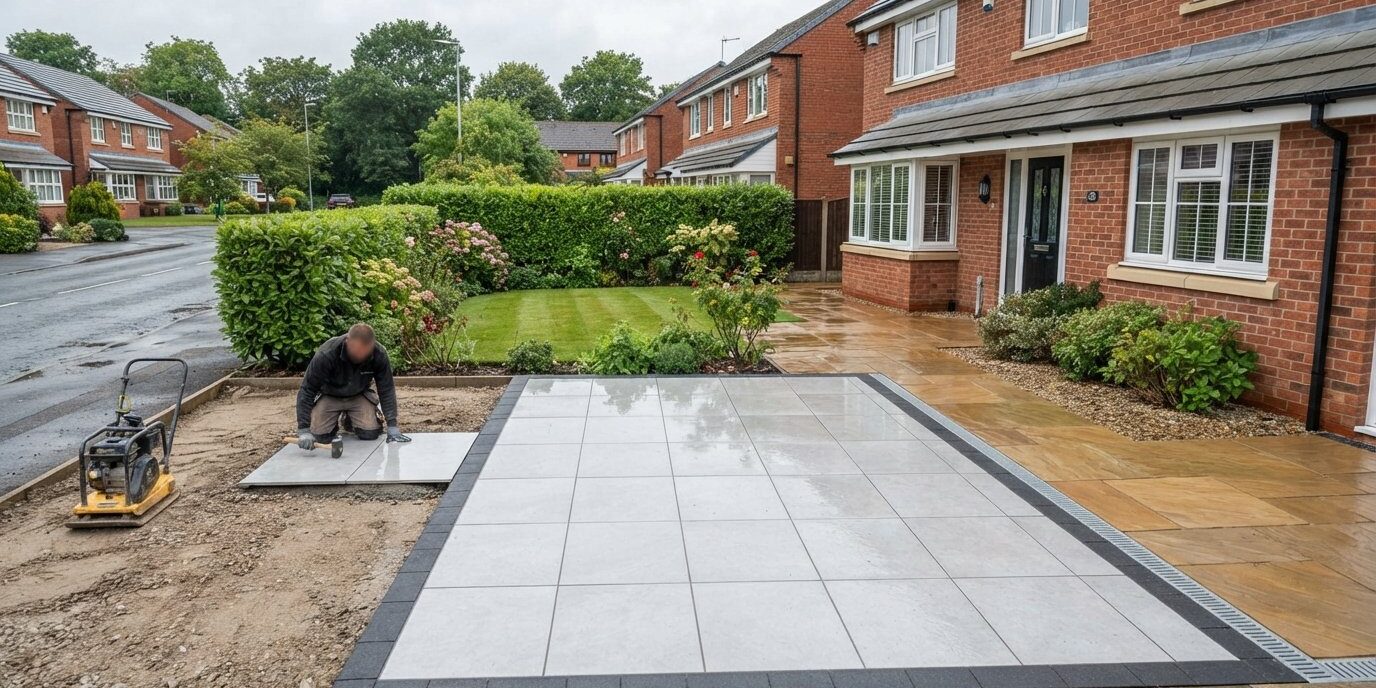
Preparation begins with removing unsuitable material and establishing the levels. The base needs to suit the surface and its intended use; a driveway and a garden seating area place different demands on the ground beneath. Compaction matters because loose or uneven layers can contribute to sinking. Keep the planned depth consistent across the area, with particular care at edges and transitions.
Before laying paving, check that the base is even and the drainage route remains unobstructed. A simple hose test can show whether water flows towards a doorway or collects beside an edge. Correcting that fall before the surface is laid is easier than addressing pooling afterwards. Record the agreed levels and edging positions so the finished work follows the design.
These practical details can transform a plain outdoor area into a fantastic, well-defined space. From a Bromley garden to a Lancashire property, the same planning principle applies: connect the surface, edge and drainage route as one design. The final pattern should work around entrances, walls and planting, not force awkward cuts into prominent areas. Careful preparation gives each paving detail a clear purpose.

Ground preparation and drainage
Good groundwork starts with understanding the site, not choosing a paving pattern. Soil, existing levels and nearby walls all affect preparation. A patio beside a house needs levels planned around door thresholds; a driveway needs a base suited to vehicle use. These early checks guide excavation, aggregate selection and the route for surface water. Award-Winning Paving’s residential projects include SuDS-compliant drainage.
Start by clearing vegetation, old paving and loose material from the planned area. Then establish the intended finished height against fixed points, such as a doorway, garage or fence post. This makes changes in level easier to spot before excavation. Mark the paving boundary and any steps or borders, so the base can be prepared for the actual layout rather than an approximate outline.
Excavation removes soft or unsuitable ground before aggregates are placed. The sub-base needs even coverage and thorough compaction; isolated soft patches can leave the surface unsupported. For block paving, a firm base helps keep the blocks aligned under regular use. Natural stone paving also needs consistent support, so individual slabs don’t rock or settle unevenly after installation.
Plan drainage for both the paved area and its surroundings. Check where rainwater collects, then set levels to direct it away from buildings. A downpipe, garden border or lawn may affect the route, and channels should remain clear of paving cuts and edging. If extending a driveway beside a garage, include the entrance and threshold in the level plan. Award-Winning Paving installs SuDS-compliant drainage.
Edge details need to be considered alongside the base. A path meeting fencing may need a neat border that leaves the fence accessible. A patio beside a planting bed needs a defined boundary to keep soil from spilling across the surface. For block paving, secure restraints help hold the outer course in position. On natural stone paving, planned edge cuts give the finished design a cleaner line.
Match the preparation to the chosen design and material. A wide range of paving formats can change where cuts fall, how borders meet and how much excavation the layout needs. Set out the pattern before laying, especially around corners and narrow sections. This helps avoid small slivers beside walls or awkward transitions between a patio and garden path.
Before paving begins, inspect the prepared area for loose aggregate, uneven levels and blocked drainage routes. Correcting these issues at this stage is simpler than lifting finished paving later. Confirm that the boundary, base and intended water flow match the agreed plan. A careful final check gives each layer a clear purpose, from compacted ground to the visible surface.
Paving contractors near me in the UK with reviews and contact details
For a Bromley patio or driveway, a useful first step is a site survey. It lets the proposed layout, access and ground conditions inform the work plan. Search results can help you find local information, but a review score alone cannot show how a particular project was prepared or finished. Look for details about the work itself.
Review comments are more useful when they describe a specific job. For example, note whether customers mention clear communication, tidy working practices, agreed layouts or how the finished surface looks. In Preston, a reported block-paving average is 10 out of 10 from 207 customer reviews. That figure is specific to Preston, not a rating for Bromley contractors or projects.
Use review details to understand the stages customers describe, not just the headline score. Comments about edging, drainage or the finished pattern can show which details mattered to homeowners. A short review may not explain the site conditions or scope, so treat it as one part of understanding a job, not a substitute for a written specification. Award-Winning Paving is Fully insured & Checkatrade approved, with an Award Winning Service.
Prepare a concise project brief before making contact. Include your Bromley location, whether you need a patio or driveway, the approximate shape and the surfaces you’re considering. Mention practical details such as steps, a narrow side entrance, existing paving or water collecting near the house. These examples help focus the discussion on your actual site. Award-Winning Paving offers Free, fast, accurate quotes, with No Deposit Needed.
At the survey, walk through the proposed area and identify boundaries, access points and how you use the space. For a patio, show where seating will go; for a drive, explain vehicle access and turning needs. Ask for the scope to distinguish preparation, paving, edging and drainage work. A written description makes the planned work easier to understand before it begins.
Use Award-Winning Paving’s contact details to discuss your project, and keep the estimate, agreed scope and follow-up messages together. If the plan changes after the site visit, make sure the revised details are recorded clearly. This gives you a practical reference for the proposed materials, layout and work stages. There is No Deposit Needed, and the company provides Free, fast, accurate quotes.
For a Bromley project, a survey can connect your ideas with the site’s practical requirements. Bring photographs or a simple garden sketch to show preferred layouts, boundaries and existing features. You can request a paving survey to discuss your patio or driveway plans and the details that shape the work.
Paving Slabs UK advises a suitable sub-base and proper drainage for a long-lasting patio surface. For tables, chairs and a barbecue, build on dug-out ground with a compacted sub-base and set slabs on mortar. Proper installation and maintenance can let block paving last 20 – 25 years.
Award-Winning Paving: Resin Bound Driveways
Award-Winning Paving can help you plan an outdoor upgrade around your home and how you use it. If you’re considering a new driveway, its Resin Bound Driveways and Block Paving Driveways provide options to discuss alongside the site layout and surface preparation. For a garden patio, Porcelain Patios offer another route to explore, with the choice guided by your preferred finish and the space available.
Bring your ideas, photographs or a simple garden sketch to a survey discussion. These details can help shape a practical plan for the surface, boundaries and drainage. If you’re weighing up driveway materials or planning a porcelain patio, contact Award-Winning Paving to talk through your project.
Make your outdoor plans the next step
Before settling on a finish, decide what you want the space to do for you. Perhaps you need a practical entrance, a more inviting place to sit, or a consistent look linking the driveway and garden. That priority gives your design choices a clear starting point and helps shape a project brief that reflects your home.
If you’re looking for paving near me in Preston, Award-Winning Paving can discuss options including Resin Bound Driveways, Porcelain Patios and Block Paving Driveways. Bring a few photographs or outline how you use the space, and the conversation can focus on your priorities and the site itself.
Take the next step when you’re ready: contact Award-Winning Paving to talk about your paving plans. A considered design can help make the space feel more like home.
Frequently Asked Questions
Are Paving Slabs Suitable for the UK Climate?
Yes, natural stone and porcelain paving are widely used in the UK because they’re durable and frost resistant, according to Paving Slabs UK. Their performance still depends on suitable installation, including stable support and drainage that prevents water pooling. For example, porcelain patios suit garden seating areas, whilst Indian sandstone offers natural colour variation. Compare samples outdoors, where changing light can affect how each finish looks beside your home.
Do I need planning permission for a new driveway?
Not always. According to the UK Government, a new driveway in England may need planning permission if it’s more than five square metres and uses non-permeable materials. This is a common concern for homeowners in Kent and South East London, but the surface and drainage design matter. Consider whether water can drain to a suitable garden area, and include that route when planning the driveway.
How do I get a quote?
Contact Award-Winning Paving by phone on 0800 494 7047 or use WhatsApp Us to request free, fast, accurate quotes. No Deposit Needed. The company provides an Award Winning Service, is Fully insured & Checkatrade approved, uses premium materials and offers a 10 Year Warranty on all work and materials. It serves Kent and South East London, including Bromley, Orpington, Sevenoaks, Beckenham, Bexley, Chislehurst, Chelsfield, Hayes, Keston and Locksbottom.
Do I need planning permission for a paved driveway in the UK?
For England, a new driveway over five square metres using non-permeable materials may need planning permission, according to the UK Government. Permeable paving or drainage to a lawn or border can affect the rules. Planning permission is a common concern for homeowners in Kent and South East London, so consider surface permeability and water flow together. Award-Winning Paving provides planning guidance per product and installs SuDS-compliant drainage.